Tuesday, November 23, 2010

Brush Away Those Winter Blues


Ok so there are hundreds, excuse me, thousands of self-help books, CDs, blogs, podcasts etc offering solutions to improve one’s mood. If you’re anything like me, at the onset of winter, you’re ready for a change: change of wardrobe, outdoor/indoor activities (camping, sitting by the fireplace, skiing, etc), but by January, the psychological effects of dreary skies, chilling temperatures, and short days start to take effect.

WHEN IS SPRING GONNA ARRIVE??

Groundhog Day with Bill Murray is
one of my all time favorite movies.
Please, let the groundhog not see his shadow this year, I want an early spring. Sound familiar? Well, there’s not much we can do to change weather patterns (pretty sure the tilt of the Earth’s axis is not about to change anytime soon) but there are some simple solutions to brighten up your everyday life even as it remains bleak outside.

COLOR plays an important, if not vital role as an environmental factor of our mood. Since I’m no interior designer (although for a bachelor, I do have color coordinated linens), below, I’ve deferred to the advice of trained professionals.

Paint is one of the least expensive and best home interior decorating techniques to bring a room to life, but before you rush out and buy your favorite paint color, you have to ask yourself one question. It is...

"What mood do I want to create in this room?" Do you want it to feel warm and cozy? Or maybe you prefer lively and cheerful?

Your answer is very important because it will determine which side of the color spectrum matches your style and personality.


Soft yellow uplifts without agitating.


Warm up. If you feel depressed, your house colors may be too cool. "If you are a person with depression issues," Pike says, "you don't want to have cool tones." For people suffering from Seasonal Affective Disorder, for example, Pike recommends mood-enhancing warm tones such as yellows, soft reds and oranges. Energizing warm tones convey happiness. But be careful not to overdo it. Bright yellow, for example, can agitate. Look for a softer version of a strong color.

Cool shades slow the heart rate and lower body temperature.


Cool down. Are you a fast talker? If you feel antsy, your house colors may be too warm. Consider adding cool shades, such as blue and green. Cool shades slow your heart rate and lower your body temperature. "Find a blue that has its toes dipped in green," Pike suggests. "That is absolutely satisfying." And although it is a warm tone, pink is also tranquilizing, as are neutrals.


Neutrals create a restful environment.


Stay in neutral. While not the best medicine for people suffering from depression, restful neutrals are great for people who like a calm environment and who like to switch out colors in their furniture and accessories as their mood changes. Neutrals are also the best bet for those planning to sell their homes. Neutrals allow prospective homebuyers to envision themselves in a home.


Try a color before you commit.


Sample color. Before settling on a particular color, try it on your walls. Paint a large patch on the wall or on poster board and live with the color for a week. Because light changes our perception of color, the same color may look different at various times of day and in each room of the house. Most people are not afraid of color, Pike says, but of choosing the wrong color. "We all have emotional responses to color," she says, "so colors can serve as tools to help us feel better."


Eco Accents Low VOC interior latex paint by Eco-Protective Products is available in over 1200 colors. Click here for more information or email us here for ordering info.

Tuesday, November 16, 2010

Thanks for Everything


In 2007, over the Thanksgiving break from the University of Georgia, when my father approached me with the idea to utilize my International Finance and Spanish degrees to help re-brand and revitalize his paint business as an alternative to pursuing a career as an Investment Banker or Financial Analyst, I saw it as the opportunity of a lifetime. Do not be fooled, the job was not going to be easy – my father would never allow me to take the easy road. There would be no silver spoon, no coat tails with which to ride, no meetings left unattended, no sales call not made, and no abundance of sleep.

It hasn’t been a cakewalk, but three years later to the week, our business has seen growth each calendar year; our brand (Eco-Protective Products) has become recognizable to some but not overly known – still work to be done; personally, we have deepened our father-son relationship, and I have learned invaluable lessons of life and business from him and my experience along the way.

I’ve always been told that if we do not stop to appreciate that which we already possess, we can never expect to receive more. So to commemorate my three years with the family business, this is my thank you.

I am not quite sure when we, as people, develop the mental faculties to truly begin to appreciate things we have in our lives. Is it a function of maturity, age, or accumulated experience (all three similar but also very distinct)? Do we awaken to the reality of what's precious to us by chance, situational environment, or at milestones? Does it take tragedy to strip away the unnecessary fluff of the everyday, the mundane, to find the inner meaning, substance, and value in our trip around the sun?

As a regular contributor to this blog, I'll be honest to our readers; I can't say that at my age I have the all the answers - I certainly do not, and each day I realize that I’m probably not even aware of all the right questions to ask. To me, life has been [cliché] a roller coaster. As uncommon as I have perceived my experiences to be, I know that shear statistical probability means that there are hundreds, thousands, perhaps millions who have lived 25 (almost 26) years on this green and blue planet similar to my own. 

As I contemplated the subject for this post, I felt the need to expand on some profound theme, but while helping elementary school students at church make pictures depicting things for which they are thankful, I had the epiphany, and I knew what I wanted to write. 

Raised as an only child, I sometimes wonder how to define what a home is. From one perspective, home can be a fire place, laughter, accumulated sports trophies, hardship, birthday parties, troubled times, Christmas card pictures, tears, missed high-fives from over exuberance, burnt meals, treasured suppers, doggie treats, All Dogs Go to Heaven, hugs and kisses, arguments - "I'll never raise my kids like you", prayers and at times curses, broken bones, mended hearts, story time, good report cards and, at times, urgent parent-teacher conferences. Parents are super heros then they become the enemy. Home is base camp for hide and go seek, refuge from summer jobs, and the return from summer vacations. It is sneaking out at 11 and the sneaking back in at 7-- only to get caught, grounded, spanked, put into time-out - whatever punishment fit the crime. Home is ears when no one else will listen. Home is your favorite t-shirt hidden away in the attic. It’s where sleeping in my parent's bed is ok because I was scared, and it’s where Jiminy Cricket sings to me to wish upon a star. It’s taco salad night, or perhaps, it's Friday Night under the Lights in Raider Valley. It’s graduation day, an empty nest once again, but it’s where I return again four years later. 

Is that really what home is?

Home can be anywhere and anything because home is not just shelves, roof shingles, eco friendly paint (product plug), hard wood floors, GE appliances, or a drive under garage; it's not necessarily the laughter that fills the halls or the sobs of sorrow when we say goodbye; it's not sleepovers, the Super Bowl party, or the time the neighbors had one too many on Christmas Eve; it's not the flood in the basement from the Washing Machine or the subsequent one from Atlanta's storms in 2009; it's not the renovation, the landscaping, the trampoline, or countless games of  H-O-R-S-E. It’s not Super Mario, Sega Genesis, an N-64, Playstation or XBox (although thank you Santa); home certainly is not the broken coffee table (I had to break in the new baseball glove) or the broken windows (it was Brent's fault); it's not the beers you caught me drinking in high school, although that was a terrifying experience to say the least; it's not when I drove away to college or when I came home with 2 degrees; it's not the place I left when I moved to a new state, and it will not be the place I return to in one week.

These are just the symptoms and signs of a good home.

It is you, Mom and Dad, that are Home to me. No matter how far apart we may be, I can always go home by picking up my phone, or reading that Facebook post from you mom, or the encouraging email from you Dad. For 25 (almost 26) years, I have fought, loved, hated, argued with you, but this Thanksgiving, I say thank you. It is the idea of home & the love of family you instilled in me that makes me who I am.

In business and life, your brand may grow – something for which every business strives – but do not be fooled, success is not derived from the products we sell but from the people we are.

In closing, to quote a beloved American icon, Forrest Gump, "That's all I have to say about that."


-Jamey

Weatherization - The Key to a Comfy Winter

I know for many parts of the country, winter is already taken a firm grip 
that will not release until March, Arpil or even May for some areas. However, there is still time (even if the snow is falling high outside your door) to take minor winterization and weatherization steps to save you money this season. 

  • According to the U.S. Department of Energy, drafts can waste 5% to 30% of your energy use. Start simple and adopt that old Great Depression fixture -- the draft snake, which you can easily make yourself. Just place a rolled bath towel under a drafty door, or make a more attractive DIY draft snake with googly eyes, felt tongues and the like. You can use any scraps of fabric -- even neckties -- and fill with sand or kitty litter for heft. Make sure drafts aren't giving your thermostat a false reading too, and read on for more advanced solutions.
  • Change furnace filters regularly (typically once per month). This will ensure your furnace runs efficiently and conserves power to keep you warm

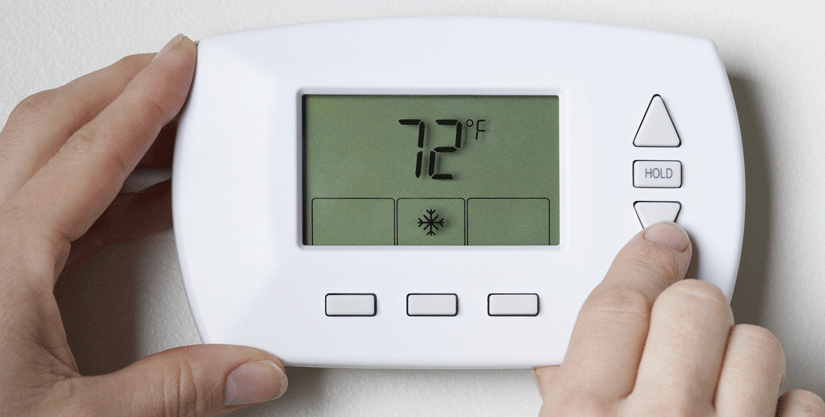
  • Don't forget to TURN DOWN your thermostat when no one is at home or at night. For every degree you lower the thermostat during heating season, you'll save between 1 and 3% of your heating bill. Make it easier with a programmable thermostat; they are widely available for as little as $50, and the average family will save $180 a year with one. Go one step further and ask your local utility if it's making smart meters available in your area as part of recent federal smart grid investments.
  • LOW-E window film. For a small price, you can DIY by covering your windows with a virtually invisible film that buffers air flow, keeping warm air in and frigid air out. Found at the Home Depot or any home improvement store. 
  • Update your home's insulation. Although this may seem common sense, many older homes do not have insulated ceilings, attics, and in between some walls. If you are a Georgia resident, contact Woodman Insulation and ask for Sandra Cummins.
  • Insulate pipes. Found at most hardware stores, you can get R-3 to R-7 adhesive insulation tape. Simply wrap around your pipes to reduce heat loss. 
  • The federal government will reimburse you for 30% of the cost, up to $1,500 for highly efficient insulation. Additionally, low-income households can qualify for an average of $6,500 worth of weatherization improvements to their homes through government programs administered by each state. Find out about your state's program by contacting contacting local agencies and utilities.
  • Be creative. Instead of always turning up the heat, bring the family around the fire to share stories together. Wear an extra sweater. Sleep with socks on. Anything you can do to save a little green this winter will go a long way for your wallets come spring. 


Doggie Sweaters are great.
Find some great options here.


And for multi-seasonal suggestions, here are a few.
  • First, test your home for air tightness. On a windy day, hold a lit incense stick next to your windows, doors, electrical boxes, plumbing fixtures, electrical outlets, ceiling fixtures, attic hatches, and other locations where there is a possible air path to the outside. If the smoke stream travels horizontally, you have located an air leak that may need caulking, sealing, or weatherstripping
  • Caulk and weatherstrip doors and windows that leak air.
  • Caulk and seal air leaks where plumbing, ducting, or electrical wiring penetrates through exterior walls, floors, ceilings, and soffits over cabinets.
  • Install rubber gaskets behind outlet and switch plates on exterior walls.
  • Look for dirty spots in your insulation, which often indicate holes where air leaks into and out of your house. You can seal the holes by stapling sheets of plastic over the holes and caulking the edges of the plastic.
  • Install storm windows over single-pane windows or replace them with double-pane windows. Storm windows as much as double the R-value of single-pane windows and they can help reduce drafts, water condensation, and frost formation. As a less costly and less permanent alternative, you can use a heavy-duty, clear plastic sheet on a frame or tape clear plastic film to the inside of your window frames during the cold winter months. Remember, the plastic must be sealed tightly to the frame to help reduce infiltration.
  • When the fireplace is not in use, keep the flue damper tightly closed. A chimney is designed specifically for smoke to escape, so until you close it, warm air escapes—24 hours a day!
  • For new construction, reduce exterior wall leaks by either installing house wrap, taping the joints of exterior sheathing, or comprehensively caulking and sealing the exterior walls.

Have any tips of your own? Please share them with us by commenting below. Thanks.
Related Posts Plugin for WordPress, Blogger...